
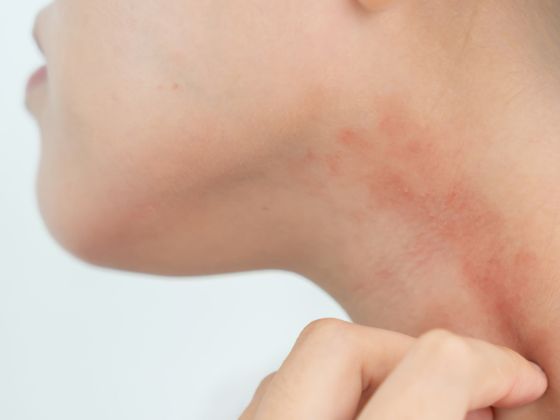
How Did Sensitive Skin Become the Norm?
More than half of us would say we have sensitive skin. That term barely existed before the 1970s, when the first reactions to PABA (para-aminobenzoic acid) sunscreens gave it a name. By 1987, it had a clinical label: cosmetic intolerance syndrome. In the early 2000s, self-reported rates of sensitive skin sat somewhere between 37% and 46%. Today, that figure is closer to 70%. In just a few decades, something that barely registered became the norm.
The numbers behind the redness
In Episode 02 of the Skin as it should be podcast, Esse’s late founder and master chemist Trevor Steyn spoke with host Geoff Paton about where these figures come from. One study, conducted at Oktoberfest, stopped 2,700 people at random and had dermatologists examine them on the spot. 64% had a diagnosable inflammatory skin condition, most without ever having sought treatment for it. People living traditional or rural lifestyles report far less of it, and in hunter-gatherer communities, it is rarely seen at all. Almost nobody is born with sensitive skin. It develops, and the pattern points squarely at how we live and what we put on our skin.
How the modern routine creates the dependence it then treats
The products meant to solve sensitivity are often what create it. Skin communicates through signalling, and when a product interrupts that signalling, it stops managing itself and starts relying on what is applied to it instead. An impaired barrier is usually the result, often caused by the very products meant to protect it. Harsh surfactants strip the surface microbiome, and what’s used to replace it, often a petrochemical or an occlusive oil, doesn’t feed the microbes that were there.
pH compounds the problem. Healthy skin sits at an acidic pH of roughly 4.5 to 5.5, favouring the microbes it evolved alongside. Most cleansers and moisturisers have a pH closer to 7, and soap can reach 10 or 11, changing skin’s environment closer to one in which healthy microbes struggle and opportunistic ones move in. Preservatives tell a similar story. They are designed to kill microbes in the bottle, and they do the same thing on skin, diminishing the microbial partners skin depends on. A depleted microbiome leaves the immune system with fewer partners it recognises, so it stays on alert and fires inflammation more easily than it should.
Protecting what skin already knows how to do
The simplest shift is also the hardest to unlearn. Sebum melts and is more easily removed above 32°C, so hot water and a foaming cleanser used twice a day strip more than dirt. Trevor’s advice was to reconsider the basics before adding anything new. Skip the morning cleanse and use lukewarm water instead. Save exfoliation for real build up rather than daily use, since repeated removal of dead skin cells only trains skin to thicken in response. Treat sebum as something worth protecting rather than a residue to remove, because it helps cultivate the microbes that keep skin calm and healthy.
Feeding the microbiome instead of fighting it
This is the thinking Esse has built products around for years. Sapienic Acid is the dominant fatty acid in human sebum, and no other mammal produces it. As part of the lipid film on the skin surface, it helps seal in moisture, maintain structural integrity, and protect against environmental irritants. Esse spent five years finding a plant source instead, a small vine grown high in the mountains of East Africa. New collection methods had to be developed just to gather its seeds. Feeding skin what it already recognises works better than replacing what has been stripped away.
The same logic sits behind Propionic Acid, the short– chain fatty acid produced by skin’s own dominant microbe, which calms immune activity and supports the barrier from within. It is the same Propionic Acid now formulated into Esse Barrier Rescue, built to relieve extremely dry, reactive skin, and support the barrier that recurring sensitivity keeps breaking down.
Sensitive skin is not a diagnosis to manage indefinitely. In most cases, it is a sign that skin’s own systems have been overridden for too long. Fewer products, chosen with intent, and time for the barrier to recover, do more than another routine built around relief. That is skin as it should be.
Listen to the full conversation, Episode 02 of Skin as it should be
References (to support the Oktoberfest study figure, the 1987 “cosmetic intolerance syndrome” date, and the early-2000s prevalence range (37–46%) which Trevor spoke about in the podcast).
- Chen J, Liu Y, Zhao Z, Qiao J. The prevalence of self-declared sensitive skin, a systematic review and meta-analysis. Journal of the European Academy of Dermatology and Venereology. 2020;34(8):1779-1788.
- Maibach HI. The cosmetic intolerance syndrome. Ear Nose Throat Journal. 1987;66(1):29-33.
- Willis CM, Shaw S, De Lacharrière O, Baverel M, Reiche L, Jourdain R, Bastien P, Wilkinson JD. Sensitive skin, an epidemiological study. British Journal of Dermatology. 2001;145(2):258-263.
- Tizek L, Schielein MC, Seifert F, Biedermann T, Böhner A, Zink A. Skin diseases are more common than we think, screening results of an unreferred population at the Munich Oktoberfest. Journal of the European Academy of Dermatology and Venereology. 2019;33(7):1421-1428.